


Hardcore Science: PPS, the All-round Powerhouse Among Industrial Materials
2026-11-27 11:10
Ordinary engineering plastics often have drawbacks: poor heat resistance, weak corrosion resistance, easy deformation and unstable insulation. With its unique molecular structure, PPS (Polyphenylene Sulfide) breaks these limitations. It is a reliable and robust material for industrial applications.
Its molecular backbone consists of alternating rigid benzene rings and flexible sulfur atoms, like a well-structured steel frame. The highly regular molecular chains and strong crystallinity endow it with superior properties that ordinary engineering plastics cannot match.
01 Heat & Aging Resistance — A Tough Performer
The conjugated structure formed by benzene rings and sulfur atoms delivers excellent stability. It can work continuously at 220℃ and withstand short-term peak temperatures of 260℃. Thermal decomposition only occurs at 370℃. After 5000 hours of aging at 232℃, it retains over 50% of its mechanical strength. It stays stable under long-term high-temperature conditions and outperforms conventional materials such as PA and PBT.
02 Corrosion Resistance & Insulation — Built-in Protective Layer
High crystallinity and conjugated structure restrain molecular polarity, making PPS weakly polar. Almost no solvent can dissolve it below 200℃, so it resists oils, acids, alkalis and organic solvents. It achieves UL94 V-0 flame retardancy inherently without extra flame retardants, and boasts excellent high-frequency insulation for high-voltage scenarios.
03 Minimal Dimensional Shift — Stability Comparable to Metal
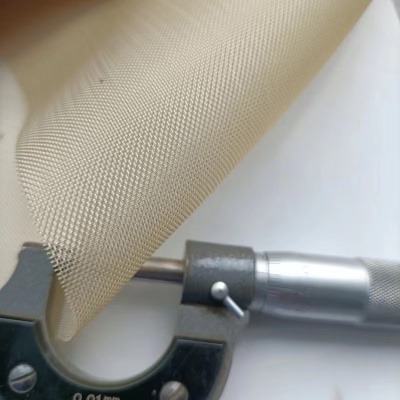
Its equilibrium water absorption is less than 0.05%, far lower than nylon, so it hardly deforms from moisture. Its thermal expansion coefficient is close to metal, with negligible dimensional change under fluctuating temperature and humidity. After glass fiber modification, the molding shrinkage rate is only 0.15%–0.25%. It features high forming precision, ideal for mass production of precision connectors, thin-walled frames, industrial filter screens and other high-accuracy parts.
Closing Remarks
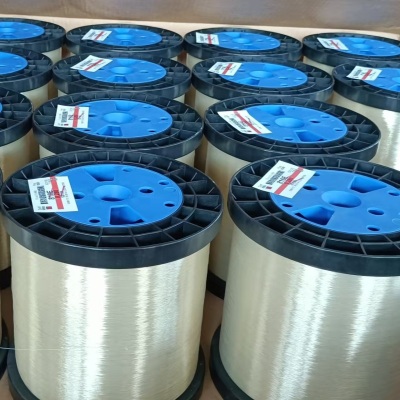
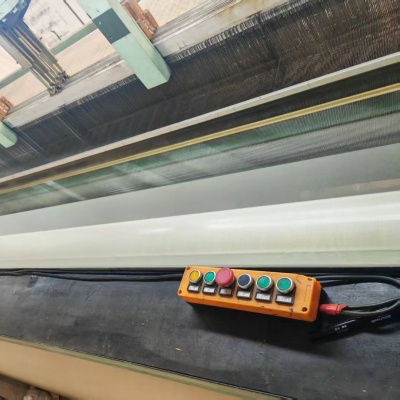
Its outstanding performance comes from its inherent molecular structure rather than post-modification. Featuring high heat resistance, corrosion resistance, reliable insulation and low dimensional drift, PPS is widely used in industrial filtration, board lamination, new energy, electrical engineering and precision manufacturing. It is a benchmark engineering material balancing cost performance and stability.
Related News
Read More >-
![Material Sheet Introduction of PPS (Polyphenylensulfid)]()
Material Sheet Introduction of PPS (Polyphenylensulfid)
-
![Screen printing knowledge]()
Screen printing knowledge
-
![Stainless steel wire mesh maintenance guide]()
Stainless steel wire mesh maintenance guide
-
![Shuguang Netting Co., Ltd. - Product Services]()
Shuguang Netting Co., Ltd. - Product Services
-
![Complete analysis of PPS (polyphenylene sulfide) material I Basic Information]()
Complete analysis of PPS (polyphenylene sulfide) material I Basic Information
-
![Why is it that PPS material can achieve high flame retardancy without the addition of flame retardants?]()
Why is it that PPS material can achieve high flame retardancy without the addition of flame retardants?
-
![Why is the chemical resistance and hydrolysis resistance of PPS material so excellent?]()
Why is the chemical resistance and hydrolysis resistance of PPS material so excellent?
-
![What are the potential applications for PPS, a high-temperature, corrosion-resistant, and high-rigidity material?]()
What are the potential applications for PPS, a high-temperature, corrosion-resistant, and high-rigidity material?