


Complete analysis of PPS (polyphenylene sulfide) material I Basic Information
2026-03-24 12:31
Complete analysis of PPS (polyphenylene sulfide) material
I Basic Information
PPS, fully known as Polyphenylene Sulfide, is a high-performance specialty engineering plastic. Due to its excellent comprehensive performance, it occupies an important application position in the fields of electronics and electrical appliances, automotive industry, chemical corrosion prevention, and so on.
II. Core Physical Properties
The physical parameters of PPS lay the foundation for its wide temperature range and high stability. The specific key indicators are as follows:
|
performance metrics |
value / range |
Instructions |
|
density |
1.34 g/cm³ |
The material is lightweight, offering a significant advantage in terms of lightness |
|
usage temperature |
-40℃ ~ 180℃ |
It can operate stably for a long time in the temperature range from extremely cold to moderately high |
|
melting point |
235℃ |
Possess good hot work formability |
|
brittle temperature |
85℃ ~ 95℃ |
It can still maintain a certain level of toughness at low temperatures, with no obvious risk of embrittlement |
|
Heat Deflection Temperature |
285℃ |
It maintains its size and is resistant to deformation under high temperatures |
|
water absorption rate |
0.02% |
With an extremely low water absorption rate, it is almost unaffected by humid environments and exhibits stable electrical performance |
III. Mechanical performance parameters
PPS exhibits excellent mechanical properties, particularly maintaining high strength and stiffness even under high-temperature conditions. The core mechanical parameters are as follows:
|
Mechanical performance indicators |
Typical value / Range |
Instructions |
|
Rockwell hardness |
>40 |
It has high hardness and good resistance to scratching and deformation |
|
tensile strength |
约 60–90 MPa(unmodified) |
Excellent tensile properties, capable of withstanding high tensile stress |
|
bending strength |
约 90–130 MPa |
With outstanding bending resistance, it is suitable for making structural supports |
|
flexural modulus |
约 3.0–4.0 GPa |
High rigidity, small modulus attenuation at high temperatures, and good dimensional stability |
|
Notch impact strength |
约 2–4 kJ/m²(unmodified) |
Pure PPS has high brittleness, and its toughness needs to be improved through glass fiber/mineral filling modification |
|
compressive strength |
约 110–150 MPa |
It has good compressive performance and can be used to make pressure-bearing components |
IV. Chemical resistance
PPS exhibits strong resistance to most chemical substances, with limitations only under specific conditions, specifically manifested as:
1. Acid resistance
It can stably withstand weak acid corrosion;
It has partial resistance to strong acids;
Not resistant to oxidizing acids, which can cause significant damage to it.
2. Alkali resistance
It can withstand corrosion from both weak and strong alkalis, and remains chemically stable in alkaline environments.
3. Solvent resistance
It is completely tolerant to alcohol and saturated hydrocarbons;
It only has partial resistance to aromatic hydrocarbons, oils, and fatty substances, and long-term immersion may lead to phenomena such as swelling.
V. Flame retardant and combustion characteristics
PPS is a natural flame-retardant material with excellent self-extinguishing properties:
It can self-extinguish during combustion without sustained combustion;
The flame burns brightly, accompanied by the characteristic odor of rotten eggs, which is a typical sign of PPS combustion.
VI. Other key performance indicators
1. Weather resistance
PPS is not resistant to ultraviolet radiation and has poor weather resistance, making it unsuitable for direct long-term exposure outdoors. Moreover, native PPS cannot be colored. If outdoor applications are required, specialized UV-resistant and toughening additives need to be added to enhance flexibility, resistance to brittle fracture, and weather resistance.
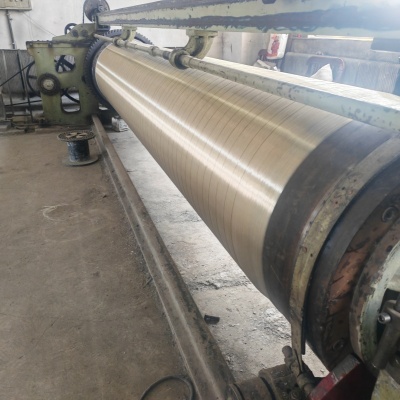
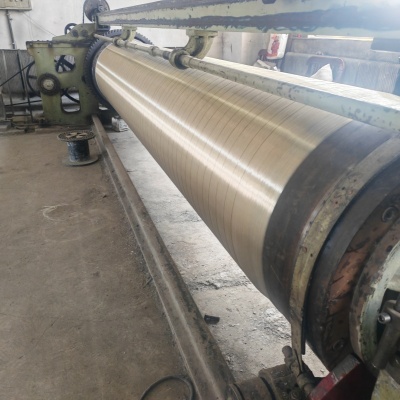
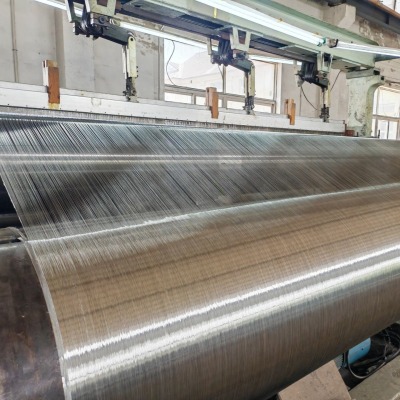
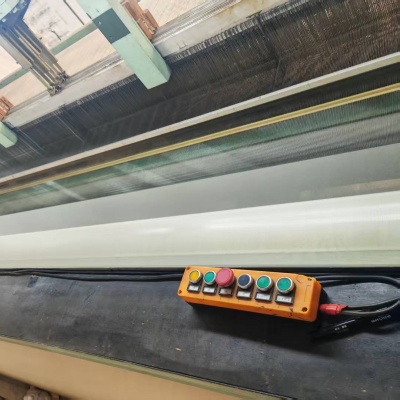
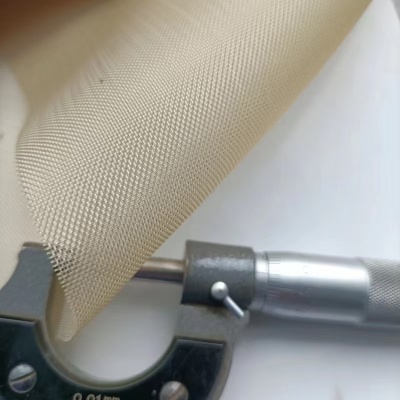
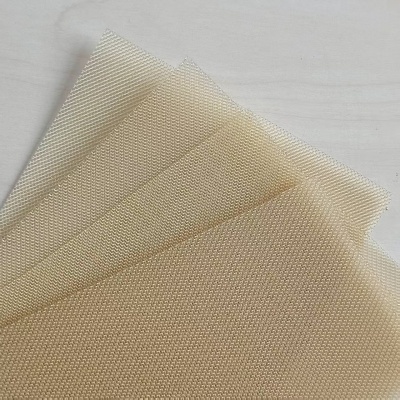
VII. Performance parameters of PPS woven mesh (warp 0.28mm, weft 0.30mm, four-harness weaving)
1. Network density and structure
Weaving method: Four-harness plain weave / twill weave (a commonly used industrial structure, featuring uniform mesh and stable structure)
Wire diameter specifications: warp 0.28 mm, weft 0.30 mm
Number of threads / Density reference:
Typical density: approximately 30–40 meshes per inch (adjustable according to the process, with higher meshes indicating smaller mesh openings)
Porosity: approximately 35%–55% (varies with mesh size, with higher porosity for lower mesh sizes)
2. Air permeability performance
Air permeability: approximately 200–800 L/(m²·s) (@200 Pa pressure difference, varying with mesh count / porosity)
Features: Uniform perforation, low airflow resistance, stable air permeability; no significant degradation in air permeability under high temperature/corrosive environments, suitable for high temperature flue gas filtration, ventilation and corrosion prevention scenarios.
3. Water permeability and filtration performance
Permeability flux: approximately 5–30 m³/(m²·h) (@0.1 MPa water pressure, positively correlated with mesh size)
Interception accuracy: approximately 50–200 μm (corresponding to a 30–40 mesh screen, capable of intercepting solid particles and suspended matter)
Features:
Low water absorption rate + chemical corrosion resistance, stable water permeability
and resistance to clogging, suitable for filtration of chemical wastewater and high-temperature liquids;
The four-ply warp-knitted structure enhances the mesh strength, making it resistant to water flow impact and less prone to deformation;
Different filtration accuracies can be achieved by adjusting the mesh size, making it suitable for scenarios such as solid-liquid separation and gas-liquid separation.
VIII. Summary of application value
PPS possesses multiple advantages such as high temperature resistance, corrosion resistance, flame retardancy, low water absorption, and moderate mechanical strength. Although it has limitations such as poor UV resistance, high brittleness in pure form, and inability to be inherently colored, these shortcomings can be effectively compensated for through modification.
The mesh material made of PPS monofilament (warp 0.28mm, weft 0.30mm, four-piece integrated weaving) not only retains the core performance of PPS, but also additionally possesses controllable air permeability, stable water filtration capacity, and high structural strength. It is an ideal material for high-end applications such as electronics and electrical equipment, automotive precision filtration, chemical corrosion-resistant filters, and high-temperature flue gas filtration, especially for scenarios with strict requirements on temperature, corrosivity, and filtration accuracy.
Related News
Read More >-
![Material Sheet Introduction of PPS (Polyphenylensulfid)]()
Material Sheet Introduction of PPS (Polyphenylensulfid)
-
![Screen printing knowledge]()
Screen printing knowledge
-
![Stainless steel wire mesh maintenance guide]()
Stainless steel wire mesh maintenance guide
-
![Shuguang Netting Co., Ltd. - Product Services]()
Shuguang Netting Co., Ltd. - Product Services
-
![Why is it that PPS material can achieve high flame retardancy without the addition of flame retardants?]()
Why is it that PPS material can achieve high flame retardancy without the addition of flame retardants?
-
![Why is the chemical resistance and hydrolysis resistance of PPS material so excellent?]()
Why is the chemical resistance and hydrolysis resistance of PPS material so excellent?
-
![What are the potential applications for PPS, a high-temperature, corrosion-resistant, and high-rigidity material?]()
What are the potential applications for PPS, a high-temperature, corrosion-resistant, and high-rigidity material?
-
![How to distinguish between cross-linked PPS and linear PPS, and what are their differences?]()
How to distinguish between cross-linked PPS and linear PPS, and what are their differences?